Picture yourself in this exact moment. It is a Friday evening in 1973. You are Frederick W. Smith — founder, visionary, and now the man holding the financial death certificate of the company you built from nothing. You stare at a bank balance of $5,000. The fuel bill due on Monday is $24,000. Without fuel, your entire fleet of planes sits on the tarmac, useless. Without planes, there is no FedEx. And without FedEx, 32,000 employees have no jobs, no salaries, no future.
What do you do?

The blackjack table where Fred Smith bet his company’s last $5,000.
Most people in that position would call their lawyers and begin bankruptcy proceedings. They would schedule a grim Monday morning meeting, avoid eye contact with staff, and prepare the announcement nobody wants to write. But Frederick Smith was not most people. He picked up his briefcase, walked out of the office, and bought a one-way plane ticket — not to a bank, not to an investor meeting — but to Las Vegas, Nevada.
Burn Rate
Finance / Startup
Definition
The speed at which a company spends its available cash reserves before becoming profitable. Measured monthly.
Real Example from This Story
FedEx was burning over $1 million per month in 1973 — far faster than its revenue could cover.
Why It Matters
Every founder must know their burn rate to calculate ‘runway’ — how many months until money runs out.
He didn’t tell a single board member. He didn’t tell his CFO. He told nobody. He sat down at a blackjack table with the company’s last $5,000 and started playing.

Cargo planes idle on the tarmac — no fuel money, no future.
“I was very desperate. If I didn’t get the money, we couldn’t fly anyway, so I decided to see what the tables had to offer.”
— Fred Smith, in a later interview
The context that makes this moment extraordinary: the year was 1973. The Arab oil embargo had just detonated like a bomb across global markets. Fuel prices had doubled overnight. FedEx, which had launched just months earlier with a revolutionary overnight delivery promise, was bleeding $1 million every single month. The entire venture capital community had already said no. The banks had already said no. Smith had personally borrowed $4 million from his family inheritance and watched it evaporate. He had maxed out every credit instrument available to him.
And yet, he sat at that blackjack table. Calm. Calculating. The same mathematical mind that had written a Yale economics paper — the very paper his professor had graded C, but that had described the precise hub-and-spoke overnight delivery model FedEx would later pioneer — was now processing odds, cards, and desperation at a casino in Nevada.
Runway
Startup Strategy
Definition
The number of months a company can operate before its cash runs out at its current burn rate.
Real Example from This Story
With $5,000 in the bank and a $24,000 weekly fuel bill, FedEx had less than one week of runway.
Why It Matters
Runway is the single most critical metric for any early-stage business. It determines every strategic decision.
By Sunday night, Smith had won $27,000. He wired $32,000 back into the corporate account — enough to pay the Monday fuel bill and keep every plane in the sky for one more week. He walked back into his office on Monday morning, said nothing about where the money had come from, and went back to work making calls to investors.
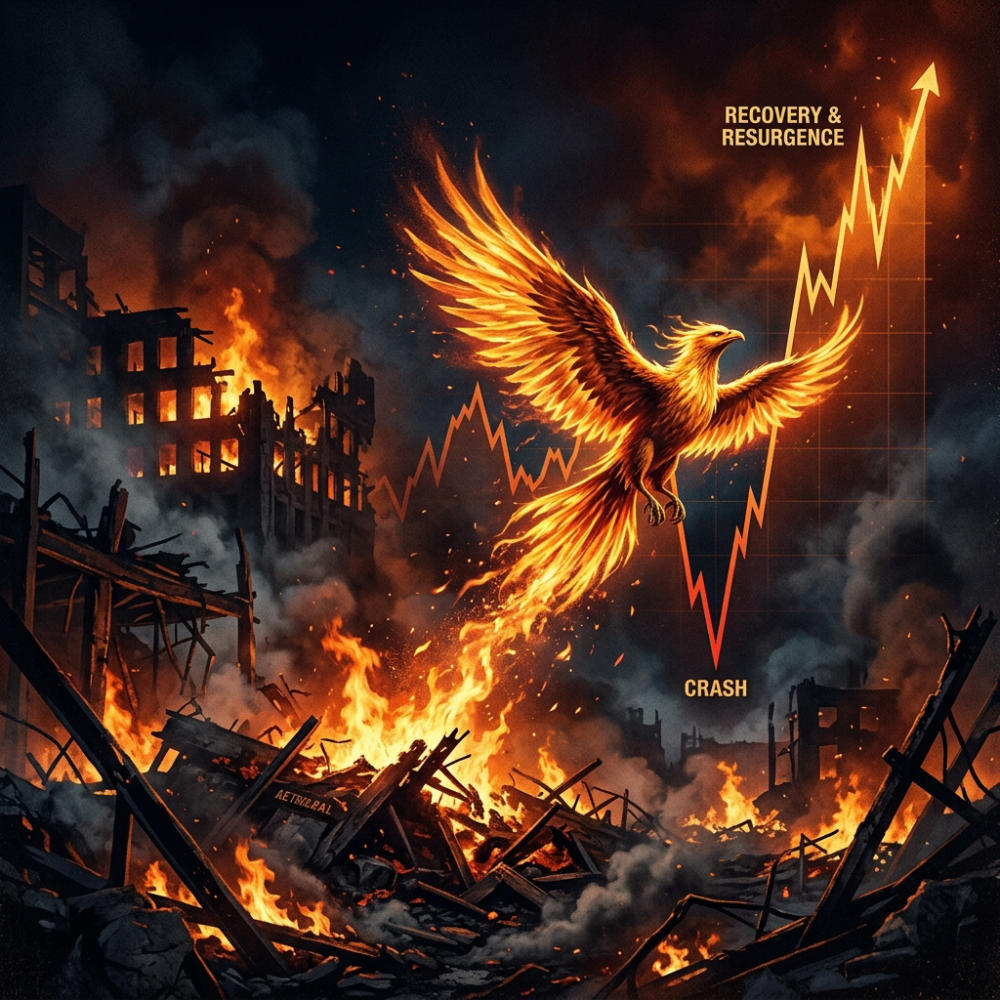
Every great comeback begins at the lowest possible point.
That one week was enough. The operational continuity Smith had purchased with his blackjack winnings allowed him to close an emergency round of $11 million in additional venture funding. The company stayed alive. By 1976, FedEx had turned its first annual profit. By 2024, it was generating over $90 billion in annual revenue and delivered 15 million packages every single day.
The $27,000 Smith won at a Vegas casino was, statistically, the highest-ROI gamble in American business history. And the lesson — that sometimes the boldest move is the only move — is one no business school will ever teach you.
Bridge Financing
Corporate Finance
Definition
Short-term capital used to keep a company operational while it secures larger long-term funding.
Real Example from This Story
Smith’s $27,000 blackjack win was essentially bridge financing — it bought time to close an $11M venture round.
Why It Matters
Bridge financing keeps the lights on. The company that stays alive long enough to close the next round wins.
Federal Express had $5,000 left. Fuel bills were $24,000. Bankruptcy was Monday. Fred Smith did something his board would never have approved — and it changed logistics forever.
What This Story Actually Teaches You
-
1
When every conventional option has failed, unconventional action becomes the only rational choice. -
2
Keeping operations alive — even by days — buys time that can be converted into long-term capital. -
3
Investors fund operating companies. Bankruptcy lawyers fund no one. Survival is the prerequisite for everything. -
4
A single desperate act, if it works, becomes a legend. If it doesn’t, it’s just a statistic. Fred Smith bet on himself. -
5
The company that inspired 15 million daily deliveries almost never survived its first winter.
This story is the ultimate case study in cash flow crisis management. Smith understood that $5,000 certain bankruptcy was worse than $5,000 risked for survival. The expected value calculation, however extreme, was correct.