
December 2009. Domino’s Pizza is in trouble. Not catastrophic trouble — they are still the second-largest pizza chain in America — but quiet, slow, grinding trouble. Their same-store sales have been declining for two years. Customer satisfaction surveys are putting them at the bottom of consumer preference rankings, not just against pizza competitors but against virtually every major fast food chain in America. An internal research project has just delivered findings so damaging that most marketing teams would have locked them in a vault and never spoken of them again.
The focus group recordings show customers saying: “Domino’s pizza crust tastes like cardboard.” “The sauce tastes like ketchup.” “The worst pizza I’ve ever had.” “You’d have to be drunk to enjoy this.”

A pivotal moment in one of history’s most dramatic business stories.
These are real customers, on camera, saying these things about a company’s core product. Most companies would respond the way any reasonable, self-protective corporate entity would: bury the research, quietly develop a new recipe, relaunch it with positive messaging, and pretend the old product never existed. This is standard crisis management procedure. This is the safe path.
Radical Transparency
Brand Strategy
Definition
A marketing approach where a brand proactively shares negative information, failures, or weaknesses before external critics expose them.
Real Example from This Story
Domino’s played unedited focus group footage of customers calling their pizza ‘cardboard’ in national TV ads — the most extreme radical transparency in fast food history.
Why It Matters
Radical transparency builds trust faster than positive messaging because it’s unexpected. Consumers are conditioned to distrust brands; honesty surprises them.
Domino’s CEO Patrick Doyle did something that made his marketing team visibly uncomfortable when he first proposed it: he suggested they put those focus group recordings in a national television advertisement. Unedited. With their actual customers’ actual words. And then announce that Domino’s had heard every word, gone back to the kitchen, completely reformulated every element of their pizza — crust, sauce, cheese — and were starting over.
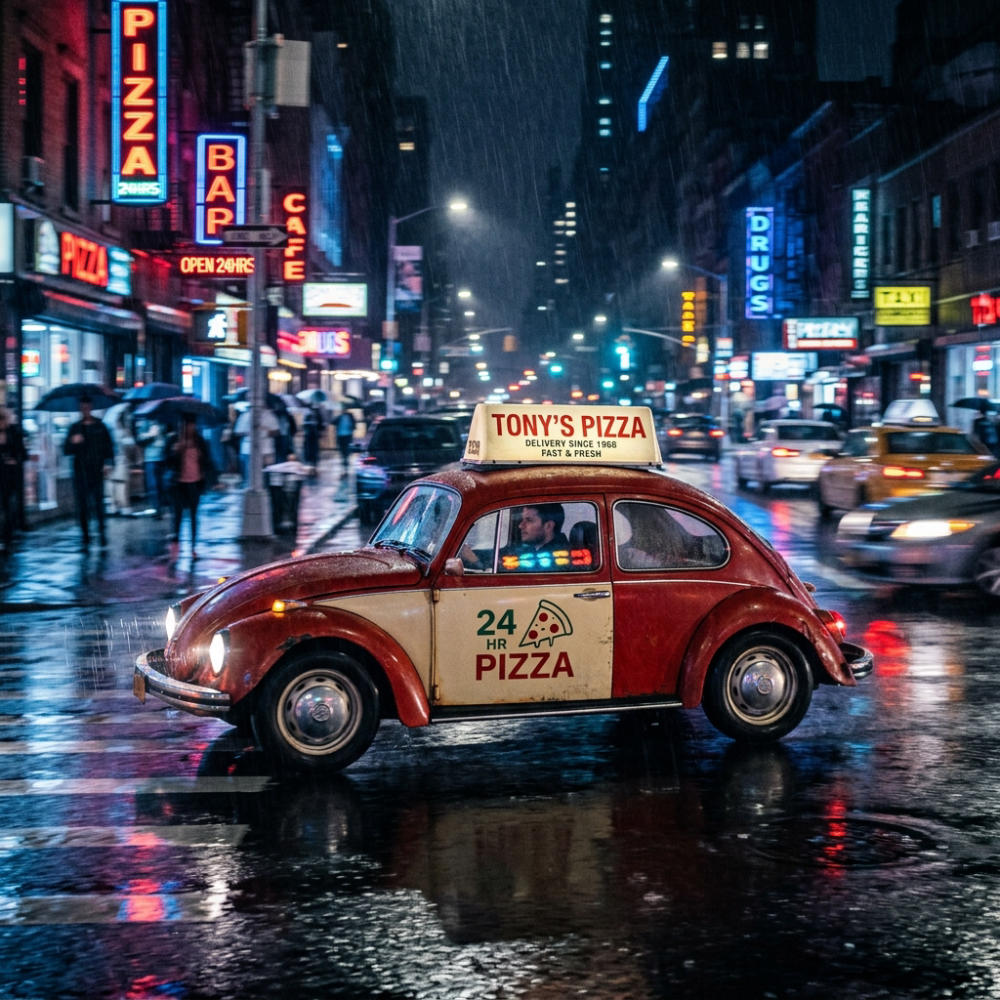
A pivotal moment in one of history’s most dramatic business stories.
The “Pizza Turnaround” campaign launched in January 2010. The ads showed the focus group footage. They showed Doyle watching it, visibly affected. They showed the development team working through the night reformulating the recipe. They showed the delivery drivers arriving at the homes of the same critical focus group participants with the new pizza — and waiting while they tried it.
“There comes a time when you know you have to change. The hardest part is admitting it publicly. But we owed that to our customers.”
— Patrick Doyle, Domino’s CEO (2010–2018)
The business results were extraordinary. Sales increased 14% in the first quarter after the campaign launched. Same-store sales — the critical metric that had been declining — reversed immediately. Consumers responded not just to the new recipe but to the unprecedented corporate honesty. In a world saturated with brands claiming they were already perfect, a company admitting it had been bad and showing its work to become better felt genuinely startling.
Brand Turnaround
Brand Management
Definition
A strategic effort to reverse declining brand perception through fundamental changes in product quality, communication, and customer experience.
Real Example from This Story
Domino’s 2009–2015 brand turnaround is studied in business schools as the definitive example of using honesty and quality improvement to rebuild a brand.
Why It Matters
Turnarounds require simultaneous product AND narrative change. Fixing the product without changing the story fails. Changing the story without fixing the product fails faster.
But the most dramatic number came later. In 2010, the year the campaign launched, Domino’s stock was trading at approximately $8 per share. By 2021, it had reached $550 per share — a 3,000% increase. This made Domino’s stock one of the best-performing investments of the decade, outperforming Amazon, Apple, and almost every other major company in America.

Every great comeback begins at the lowest possible point.
A pizza chain that publicly admitted its pizza tasted like cardboard became, by stock return metrics, one of the greatest investments of the decade. The lesson: radical honesty, backed by genuine improvement, is a marketing strategy that almost no one has the courage to execute — and precisely because no one has the courage, it works every time someone does.
Net Promoter Score (NPS)
Customer Experience
Definition
A metric measuring customer loyalty: ‘How likely are you to recommend this company to a friend?’ Scores range from -100 to +100.
Real Example from This Story
Before the turnaround, Domino’s NPS was among the lowest in fast food. The Pizza Turnaround campaign directly addressed NPS by changing the product that caused low scores.
Why It Matters
NPS is the single number that predicts organic growth. Companies with high NPS grow faster because their customers do their marketing for them.
In 2009, Domino’s played focus group footage of customers calling their pizza ‘cardboard’ and ‘the worst’ in a national TV ad. Then they watched their stock price increase 3,000% over the next decade.
What This Story Actually Teaches You
-
1
Radical honesty about product failure, backed by genuine improvement, builds more trust than any positive campaign ever could. -
2
The companies with the courage to admit failure publicly are the rarest and most respected — competitors almost never do it. -
3
Domino’s didn’t just change the pizza — they changed the entire narrative around the brand: from ‘convenient but bad’ to ‘brave enough to get better.’ -
4
Stock performance over a decade proved: authentic brand transformation has a higher ROI than sustained marketing investment in a weak product. -
5
The best focus group finding is the one you have the courage to act on publicly.
Domino’s executed the most documented case of Radical Transparency Marketing in fast food history. The psychological mechanism: when a brand admits weakness before critics point it out, it neutralizes negative perception and repositions vulnerability as authenticity.