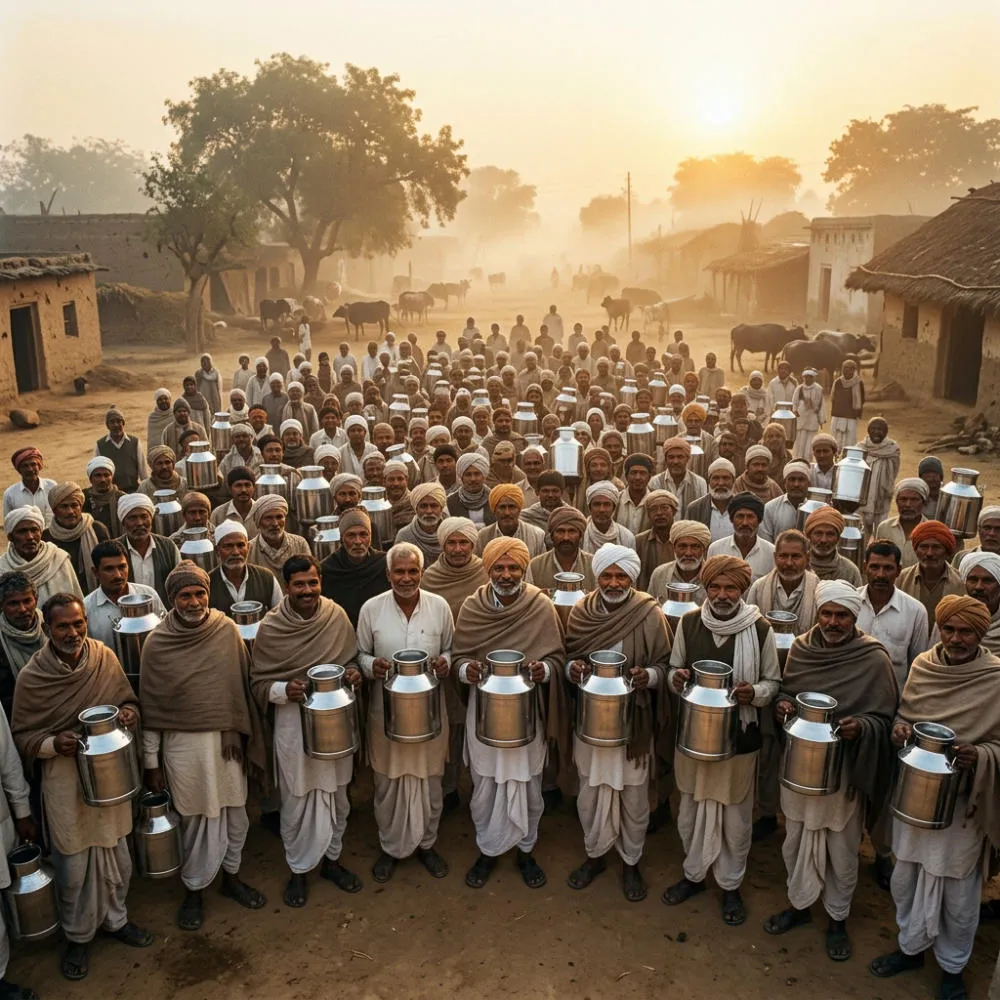
Stand in a small village in Anand, Gujarat, in 1945. You are a dairy farmer. You wake before dawn. You milk your cows and your buffalo in the dark. You carry the fresh milk to the collection point. You hand it over. And you receive almost nothing for it — because the only buyer in the region is a company called Polson Foods, which holds a government-backed monopoly on milk collection and supply to Bombay.
Polson buys your milk at rock-bottom prices. Then it processes, packages, and sells that same milk to urban consumers at massive margins. The profit goes to Polson’s shareholders. You go home with barely enough to survive.
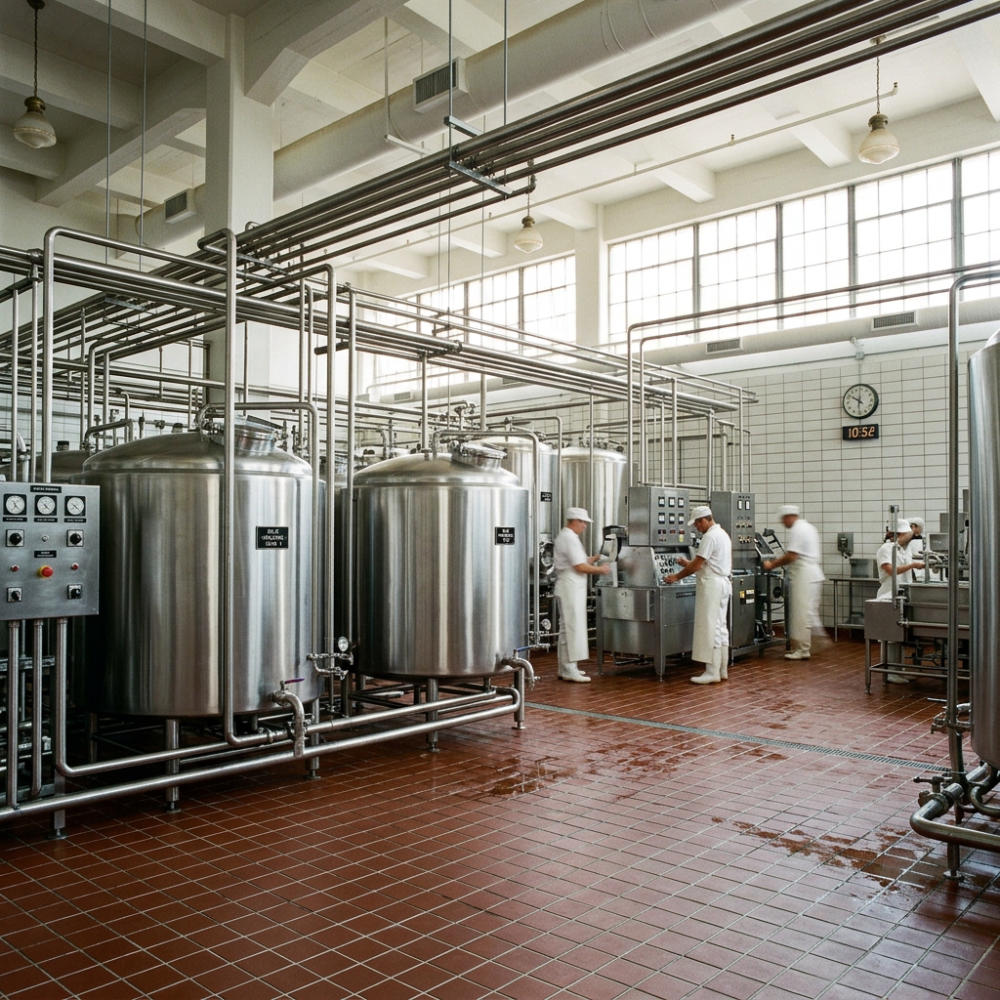
The cooperative built an empire that defeated colonial-era monopolies.
This was the reality for tens of thousands of dairy farmers across the Kaira district of Gujarat. It was a system designed to extract value from the rural poor and redistribute it to urban businesses and colonial-era commercial networks. And for decades, the farmers had no choice but to accept it.
Cooperative Business Model
Business Structure
Definition
An enterprise owned and democratically controlled by its members, who share in profits proportional to their participation rather than capital investment.
Real Example from This Story
Amul is owned by 3.6 million dairy farmers. Each farmer is a shareholder. Profits flow back to them — not to external investors.
Why It Matters
Cooperative models align producer and owner interests perfectly, eliminating the exploitation that investor-owned models can create.
Then, in 1946, a group of farmers did something remarkable: they went to see Sardar Vallabhbhai Patel. At the time, Patel was one of the most powerful figures in India’s independence movement — a man who understood economic power with the same clarity he understood political power. He listened to the farmers’ grievances and gave them a single, radical instruction: stop supplying milk to Polson. Withhold it completely. Organize yourselves into a cooperative. Become your own buyer, your own processor, your own brand.
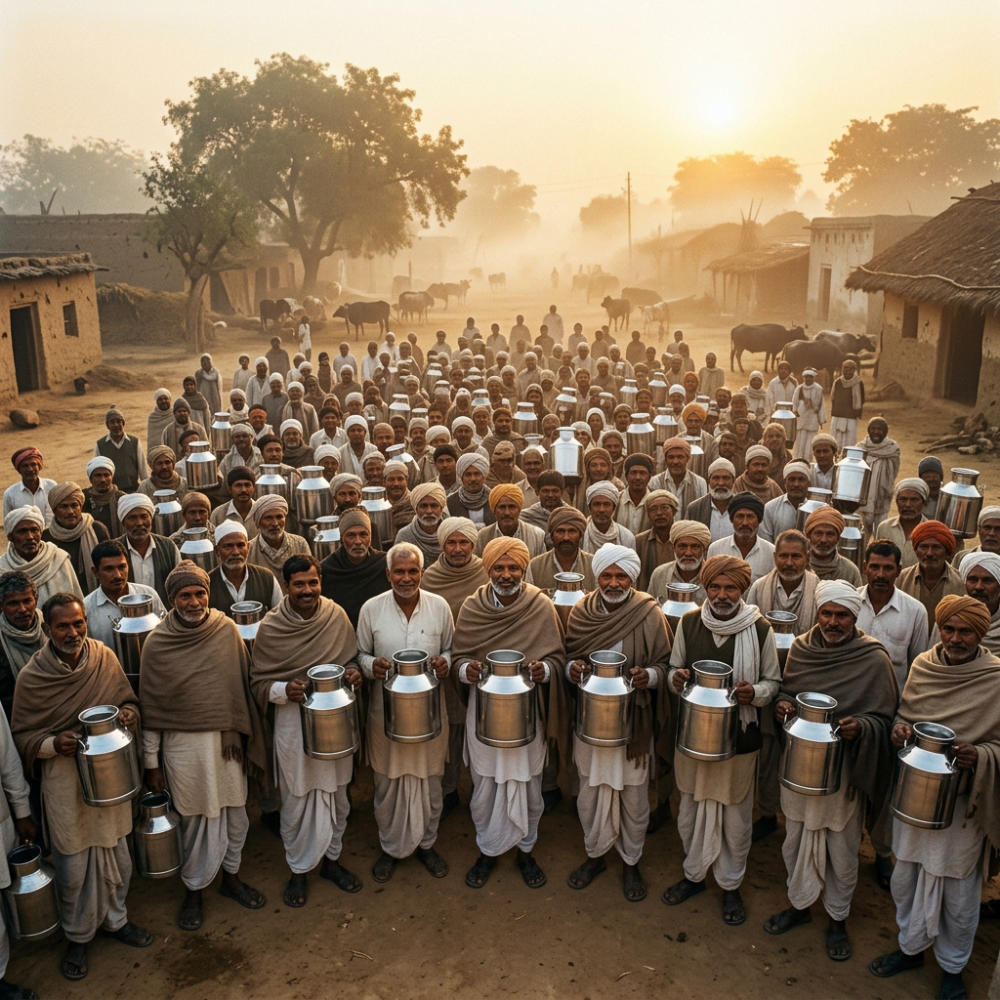
The dairy farmers of Gujarat who started a revolution by refusing to sell their milk.
The farmers went on milk strike. For 15 days, Bombay received no milk from Kaira district. The crisis was immediate and highly visible. Under public pressure, the government was forced to intervene — and the result was the formation of the Kaira District Cooperative Milk Producers’ Union, which began operations with just two village cooperatives and 250 liters of milk per day.
In 1949, a young engineer named Verghese Kurien arrived in Anand on a government posting he had no interest in. He had studied dairy engineering at Michigan State University on a government scholarship and was contractually required to serve in India for a specified period before he could leave for what he imagined would be a career in America. He planned to leave as quickly as possible.
Brand Mascot
Brand Building
Definition
A recurring visual character that personifies a brand’s values, creates recognition, and builds emotional connection across decades.
Real Example from This Story
The Amul Girl has appeared in topical billboards since 1966 — 60 years of consistent brand character. No rebranding. No reinvention.
Why It Matters
A strong mascot creates brand memory that transcends product changes, price shifts, and competitive pressures. It becomes cultural.
He stayed for the rest of his life.

India’s market has produced some of the most dramatic business stories on Earth.
“I had come to serve my bond. I ended up serving my country. I found my mission in a milk cooperative in a small Indian town, and I never needed to look for another one.”
— Dr. Verghese Kurien, “Milkman of India”
Kurien achieved something Western dairy scientists called impossible: he developed a process to manufacture milk powder and condensed milk from buffalo milk. Every existing technique worldwide was based on cow milk. Buffalo milk has a fundamentally different fat composition. Kurien solved it anyway, because the farmers needed him to, and because solving impossible problems was simply what he did.
The brand was named Amul — from the Sanskrit word “amulya,” meaning priceless. Their marketing mascot, the Amul Girl, has been appearing on outdoor billboards since 1966 with witty, topical commentary on Indian news and culture. It is the longest-running outdoor advertising campaign in history. The campaign has never stopped running. Entire generations of Indians have grown up recognizing her red polka-dot dress.
Backward Integration
Supply Chain Strategy
Definition
When a company takes ownership of its upstream supply chain — becoming its own supplier instead of buying from third parties.
Real Example from This Story
Amul’s cooperative structure meant the dairy farmers became the company itself — the ultimate backward integration eliminating the middleman entirely.
Why It Matters
Backward integration reduces dependency on suppliers, controls quality, and often dramatically improves margins.
In 1965, Kurien’s model was so successful that Prime Minister Lal Bahadur Shastri personally asked him to replicate it nationally. The resulting program — Operation Flood — turned India from a milk-deficient country into the world’s largest milk producer by 1998. Today, Amul is owned by 3.6 million dairy farmers. The company that started with 250 liters a day now handles over 26 million liters daily. And the monopoly that once exploited those farmers? Polson Foods no longer exists.
Dairy farmers in Anand, Gujarat were paid almost nothing for their milk while Polson Foods sold it back to cities at a massive premium. When Sardar Patel told the farmers to revolt, they listened. The result was Amul.
What This Story Actually Teaches You
-
1
Collective economic power can defeat monopoly power when organized around a clear, shared interest. -
2
The impossible often just means no one has tried it with sufficient belief: buffalo milk powder was ‘impossible’ until Kurien made it. -
3
The Amul Girl campaign proves that consistent, witty, culturally-relevant communication builds a brand that no budget alone can buy. -
4
Operation Flood shows that the right business model, scaled correctly, can change the food security of an entire nation. -
5
Kurien stayed because he found meaning. The most powerful motivation in business is purpose, not salary.
Amul is the world’s greatest example of Cooperative Business Model success. Unlike corporate structures that extract value from farmers and redistribute it to shareholders, cooperatives distribute profits back to the producers. This alignment of incentives — producers are also owners — creates a fundamentally different and more resilient business.