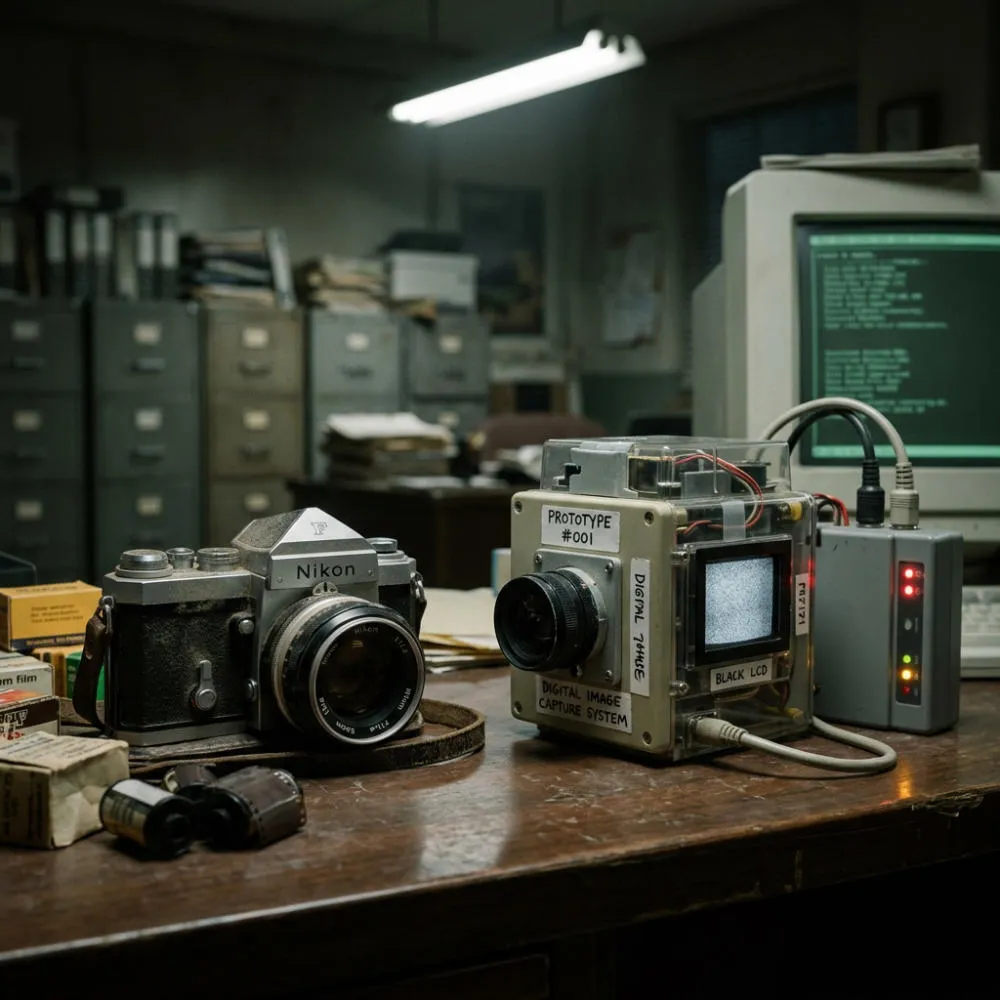
Rochester, New York. 1975. A 24-year-old electrical engineer named Steven Sasson is sitting in a Kodak laboratory. He has been given a vague assignment: use the newly available CCD image sensor chip to see what happens when you try to capture an image electronically. Nobody expects him to achieve anything groundbreaking. This is exploratory tinkering, not a product development brief.
Sasson builds a device using a CCD sensor, a digital cassette tape, and a custom circuit board. It weighs 3.6 kilograms. It takes 23 seconds to save a single photograph — a low-resolution black-and-white image — to a cassette. But when he connects it to a television screen and the image appears, something unprecedented has occurred: a photograph has been taken without film.
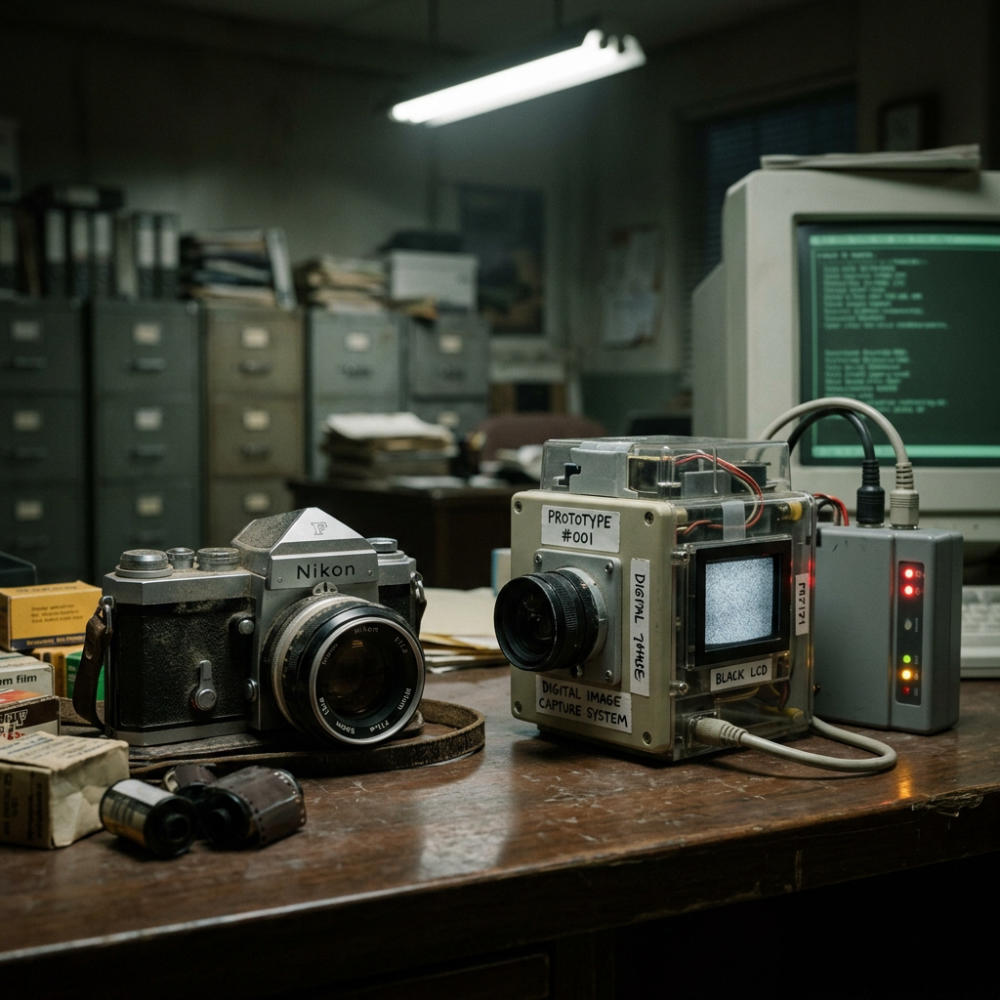
The digital camera prototype Kodak invented — and then buried.
He has just built the world’s first digital camera. The year is 1975. No one else on earth has done this. The technology is rudimentary — the image resolution is 0.01 megapixels. But the principle works. The concept is proven. The future of photography is sitting on a table in a Kodak lab, and Kodak is the company holding it.
Cannibalization
Product Strategy
Definition
When a new product or service reduces the sales of an existing product from the same company.
Real Example from This Story
Kodak feared digital cameras would cannibalize film sales. They were right — but by not launching, they allowed competitors to cannibalize everything.
Why It Matters
The choice is never ‘cannibalize or not.’ It’s ‘let us cannibalize our product, or let our competitor do it.’ The outcome of inaction is always worse.
Sasson demonstrates his device to Kodak’s management. Their response is cautious, then increasingly uncomfortable. They ask him to keep developing it. They also ask him not to talk about it publicly. As the technology improves over subsequent demonstrations, their discomfort grows into something more deliberate. The question being asked in Kodak’s boardrooms is not “How do we build this into a product?” It is “How long before this threatens our film business?”

Most founders are told no before they change the world.
Film was Kodak’s entire empire. The company generated roughly 80% of its profit from film products — a high-margin consumable that every camera in the world required. Kodak estimated that if digital photography achieved mainstream adoption, it would eliminate their core revenue stream. Their response to this threat was not to lead the digital transition. It was to manage, slow, and delay it.
“My prototype was a camera that didn’t use any film, and every marketing person’s, every corporate officer’s response was, ‘that’s cute — but don’t tell anyone about it.'”
— Steven Sasson, inventor of the digital camera
Kodak did develop digital camera technology internally through the 1980s and 1990s. They held over 1,000 patents in digital imaging. But they consistently prioritized film product revenues over digital product investments. They launched digital cameras late, priced them high, and failed to build the software and services ecosystem that would define digital photography’s value proposition. Sony, Canon, and Nikon — companies that had nothing to lose from killing film — moved aggressively while Kodak hesitated.
Incumbent Inertia
Organizational Behavior
Definition
The organizational tendency of successful market leaders to resist change because their current model is working — until it suddenly isn’t.
Real Example from This Story
Kodak had every resource needed to lead the digital transition: patents, brand, distribution, talent. Incumbent inertia stopped them from using any of it.
Why It Matters
Incumbent inertia is the reason why most industry transformations are led by new entrants, not existing leaders.
By the early 2000s, digital camera sales were accelerating beyond any projections. Film sales were collapsing. Kodak was hemorrhaging money. They tried to pivot — launching digital printing services, digital photo sharing platforms, and digital printing kiosks — but they were building on the wrong foundation, too late, with a culture that had spent decades prioritizing the protection of film over the creation of the future.
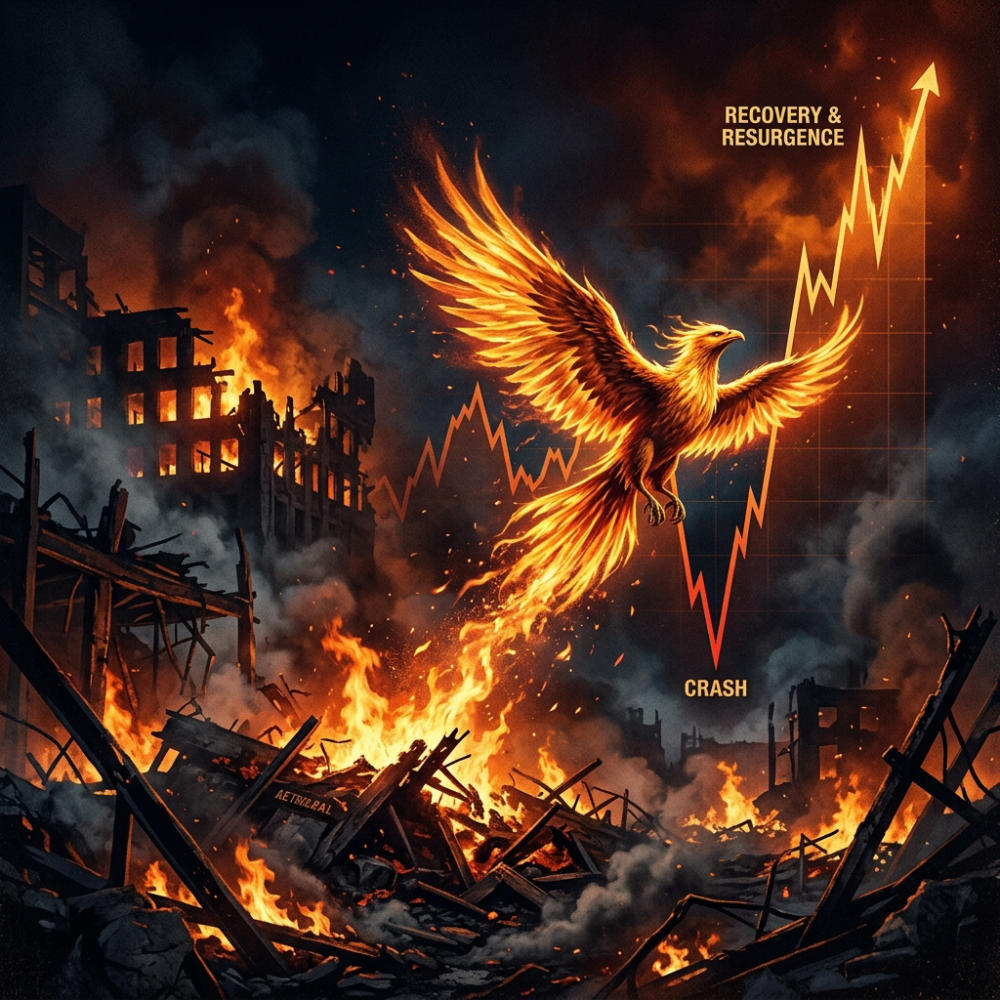
Every great comeback begins at the lowest possible point.
In January 2012, Eastman Kodak Company filed for Chapter 11 bankruptcy protection. The company that had invented digital photography filed bankruptcy because digital photography replaced it. Steven Sasson, who built the first digital camera at age 24, was awarded the National Medal of Technology and Innovation by President Obama in 2009. Kodak, which could have owned the entire digital imaging industry, was honored to have employed him.
Patent Portfolio
Intellectual Property
Definition
A collection of patents held by a company, representing its protected innovations and potential licensing revenue.
Real Example from This Story
Kodak held 1,000+ digital imaging patents but failed to commercialize them. After bankruptcy, these patents sold for $525M — the only valuable asset remaining.
Why It Matters
Patents protect innovations — but only if the company has the courage to commercialize them. A patent that isn’t used is just legal paperwork.
A 24-year-old Kodak engineer built the world’s first digital camera in 1975. His bosses told him to hide it so it wouldn’t hurt film sales. 37 years later, digital photography filed Kodak’s bankruptcy papers.
What This Story Actually Teaches You
-
1
Inventing the technology that will replace you is not a competitive advantage if you bury it to protect existing revenue. -
2
Film was Kodak’s identity, not just its product — and companies that confuse their identity with their product cannot adapt. -
3
The executives who buried digital photography were not fools — they were making rational decisions for irrational short-term incentives. -
4
1,000 patents in digital imaging + zero market leadership = the most devastating example of innovation without execution in business history. -
5
The lesson is not ‘innovate.’ It is: ‘have the courage to kill your own most profitable product before your competitor does it for you.’
Kodak is the ultimate example of Disruption by the product you created. Sasson’s 1975 invention should have made Kodak the global leader in digital photography. Instead, Kodak’s Cannibalization Fear — the refusal to let a new product eat into an existing profitable one — created the exact outcome they were trying to prevent.